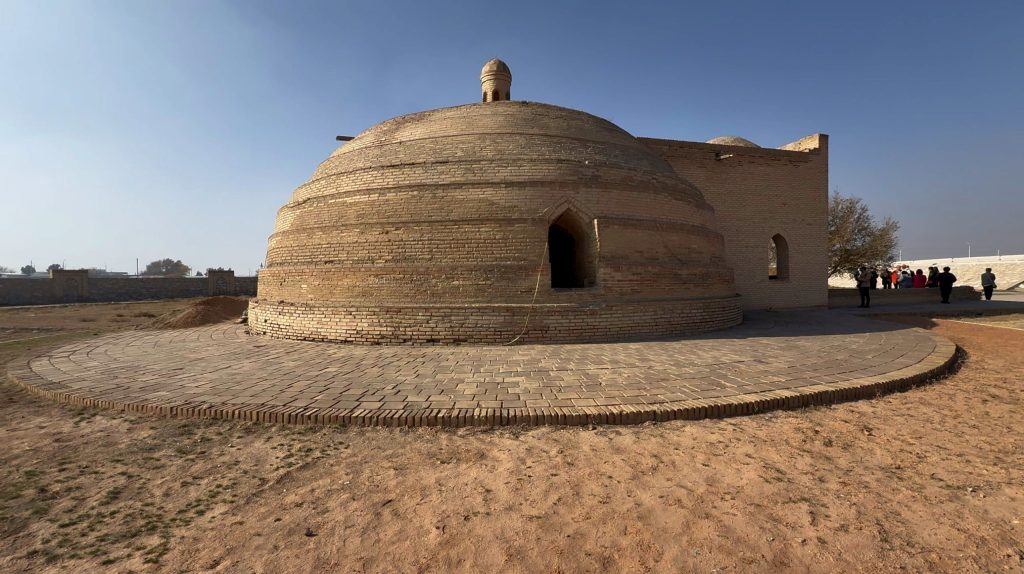

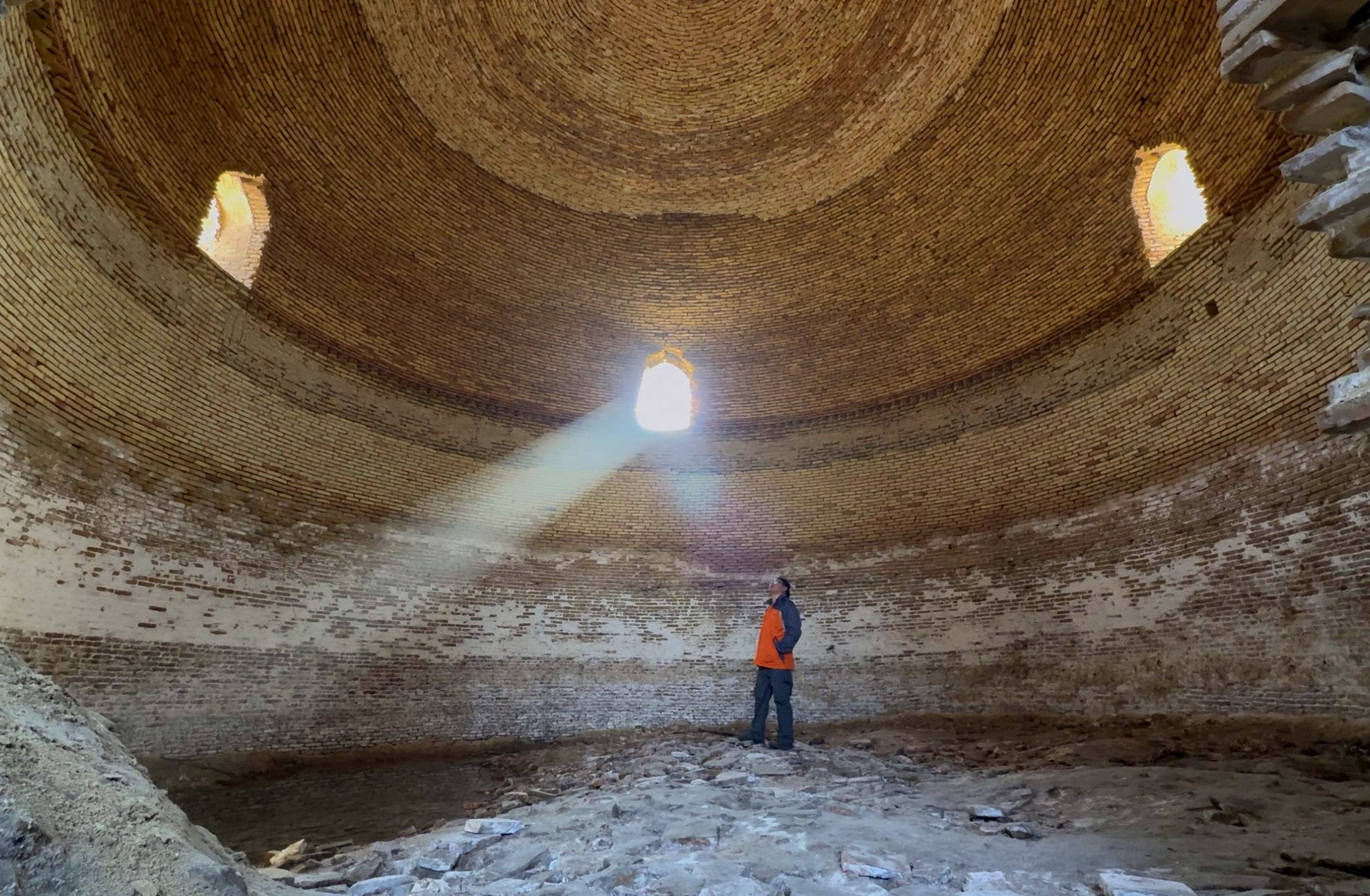
The sound is what hits first — or rather, the absence of it. Inside the dome, Dilshod’s voice drops to barely above a whisper and still rolls around the brickwork for a full second before it fades. Above us, ring after ring of hand-laid brick spirals up toward a single circular opening, and a shaft of white desert light cuts clean across the dark, dust hanging in it like something solid. “Sardoba,” he says, tipping his head back to follow the light. “It means ‘cold water.’ This whole building is a cup.”
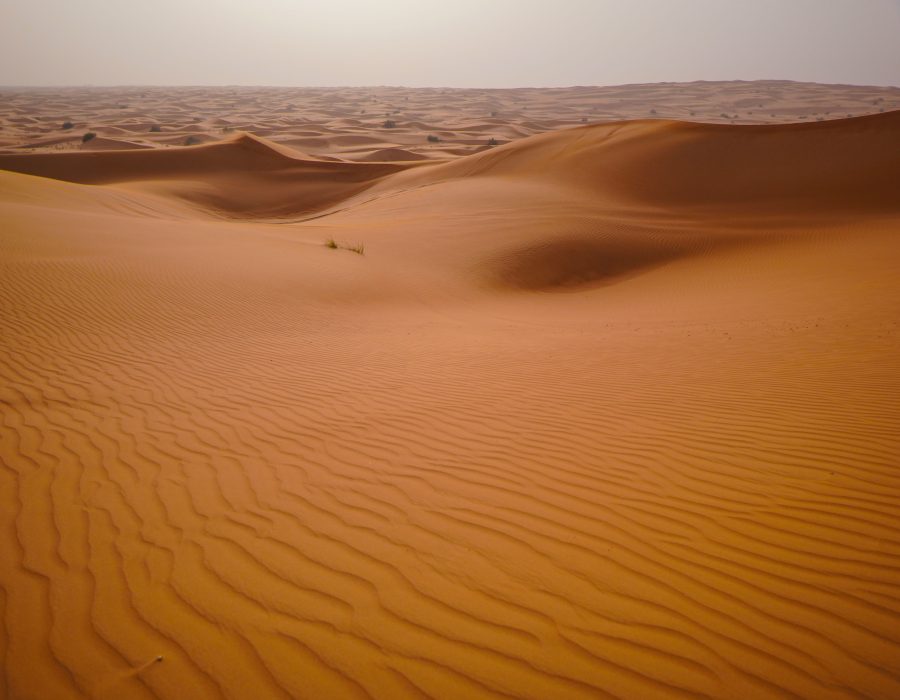
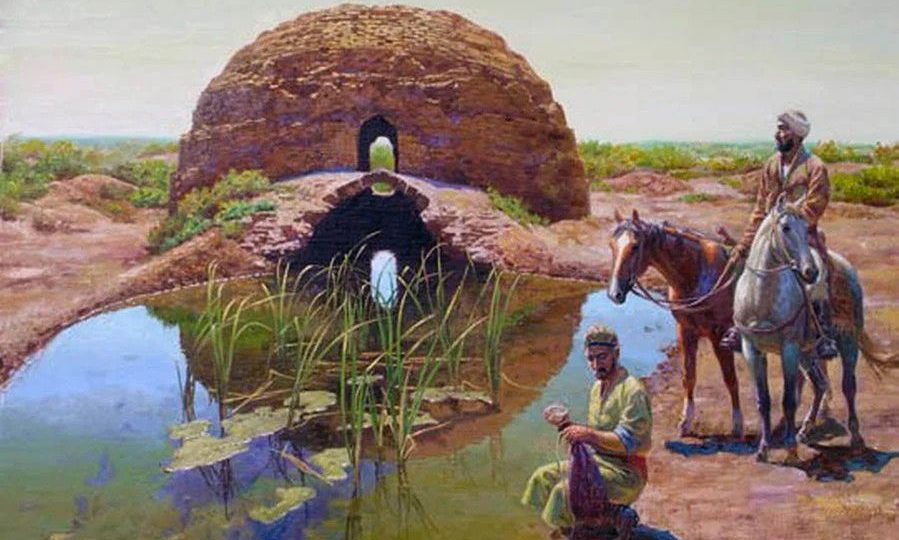
Scattered across the arid country around Bukhara — and through the Kashkadarya, Navoi, Jizzakh and Syrdarya regions beyond it — these domed brick cisterns were once the only reliable punctuation marks on a desert crossing that could otherwise kill a traveller through thirst alone. Most are ruined now, roofless in patches or fully collapsed, standing in the landscape like the one we’ve climbed into: a dry, rubble-floored shell, its function long finished, its shape still unmistakable from a mile off.
How a dome becomes a cup
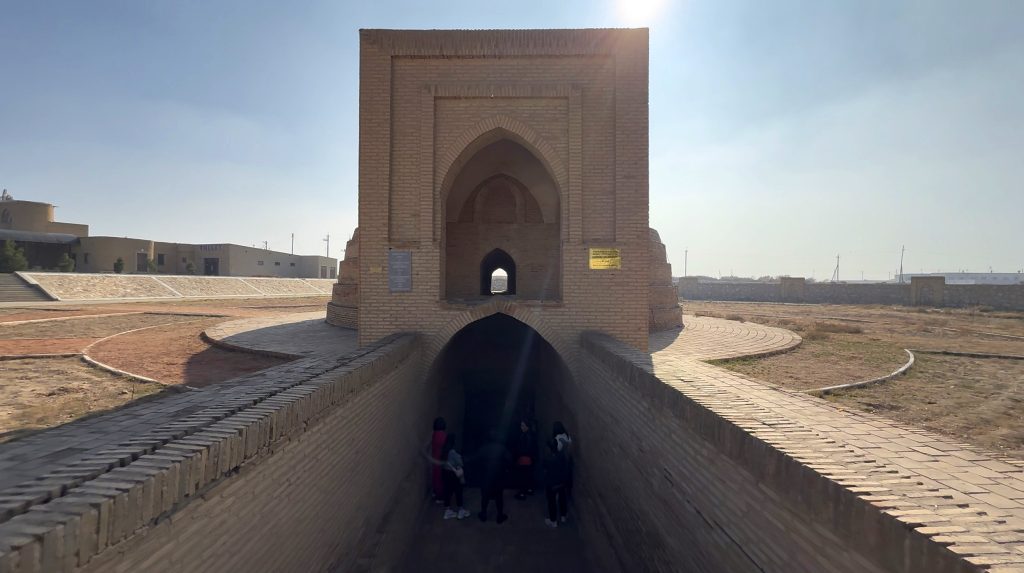
The engineering is deceptively simple. A sardoba’s dome funnels rain and snowmelt down through openings at its crown into a deep circular reservoir below, sometimes twelve or thirteen metres down — the largest, at Rabat-i Malik on the old road to Samarkand, was fed instead through an underground channel tapping the Zarafshan River itself, keeping the water cool and clean through the height of summer. A sixteenth-century writer, unwilling to let modesty get in the way, compared the taste of that particular cistern’s water to the Zamzam spring in Mecca.
Caravan traders relied on that comparison being at least a little true. Along routes where the next well might be two or three days’ ride away, a sardoba’s silhouette on the horizon — visible from far further than any well marker at ground level — meant water, shade, and a reason to believe the crossing was survivable.
Empty now, but still finding people
What’s left today is mostly brick and light. The reservoirs are dry, the ramps and stairways down to the water crumbling at their edges, and every one Dilshod has shown visitors over the years gets the same reaction before he says a word: people stop talking and just look up. “Nobody expects the inside,” he says, picking his way back across the rubble toward the entrance. “From outside, it’s a hill. Inside, it’s the only cathedral the desert ever built.”